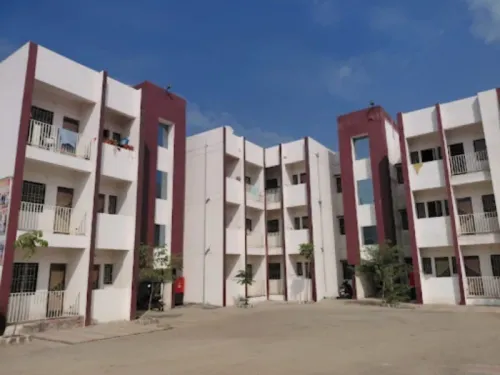



Buying a residential property involves substantial financial commitment, which makes regulatory information an important part of due diligence. For many homebuyers, RERA Approved Flats are among the options they actively search for because the Real Estate Regulation and Development framework has introduced greater formalization and disclosure requirements into the property market.
Buyers in Nagpur and elsewhere in Maharashtra should understand what RERA registration can tell them and, equally importantly, what they should still verify independently.
Understanding RERA Registration
The Real Estate Regulation and Development Act established a regulatory framework for qualifying real estate projects and agents.
In Maharashtra, buyers can use the relevant state RERA framework to review information available for registered projects.
Project registration can make important information more accessible, but buyers should not interpret the term as a substitute for all legal, financial, or technical due diligence.
What Buyers Can Review
Depending on the project and information available through the regulatory system, buyers may be able to review details connected with the project's registration, promoter, declared timelines, approvals, and other disclosures.
This gives buyers an additional source of information rather than requiring them to depend entirely on brochures or verbal discussions.
Before booking a flat, compare information supplied by the developer with relevant official project records.
If anything appears unclear, seek clarification before proceeding.
Check the Project Details Carefully
Simply seeing a RERA registration number in marketing material should not end the verification process.
Buyers should independently check whether the number corresponds to the correct project and understand the information associated with it.
Project names can sometimes be similar, so details should be matched carefully.
For developments around Wardha Road, buyers should also confirm the exact project location and understand its connectivity with the parts of Nagpur important to their household.
RERA Is Only One Part of Due Diligence
A residential purchase requires a broader assessment.
Depending on the transaction, buyers may need to examine:
- Title-related documents
- Sanctioned building plans
- Agreement conditions
- Payment schedule
- Property specifications
- Applicable possession documentation
- Registration requirements
- Loan-related conditions
Independent legal assistance can help buyers understand documents and contractual obligations before they commit significant funds.
Compare What Was Promised With What Is Documented
Marketing material is useful for discovering a project, but formal documents should guide the final transaction.
Ask which specifications, facilities, timelines, and property details form part of the official documentation.
If a feature is important to your purchase decision, understand how it is represented in the relevant agreement or project records.
This reduces reliance on assumptions.
Evaluate the Home Itself
Regulatory compliance does not determine whether a flat suits your family.
Buyers still need to assess configuration, usable area, ventilation, construction specifications, affordability, commute, neighbourhood, and long-term space requirements.
A legally documented property can still be unsuitable if it does not fit the household's practical needs.
Those evaluating residential developments by Sukhkarta Developers can review project information alongside their own legal and financial due diligence before deciding whether a particular home meets their requirements.
Make Verification Part of Every Property Purchase
The value of RERA Approved Flats lies partly in the greater availability of structured project information for buyers. That information becomes most useful when purchasers actually review it and compare it with the documents presented during the transaction.
For buyers in Nagpur and across Maharashtra, RERA verification should form one layer of a broader decision-making process involving legal checks, financial planning, physical inspection, and location assessment.
A well-informed home purchase is built on verifiable information rather than assumptions, irrespective of the property's price, configuration, or stage of completion.