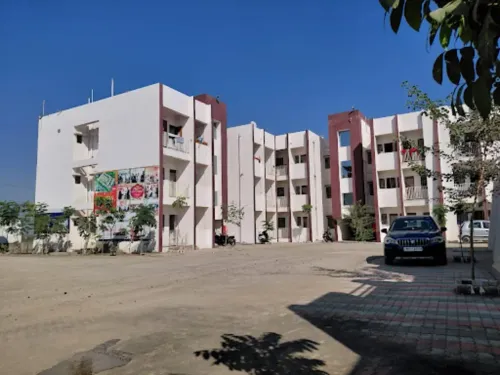
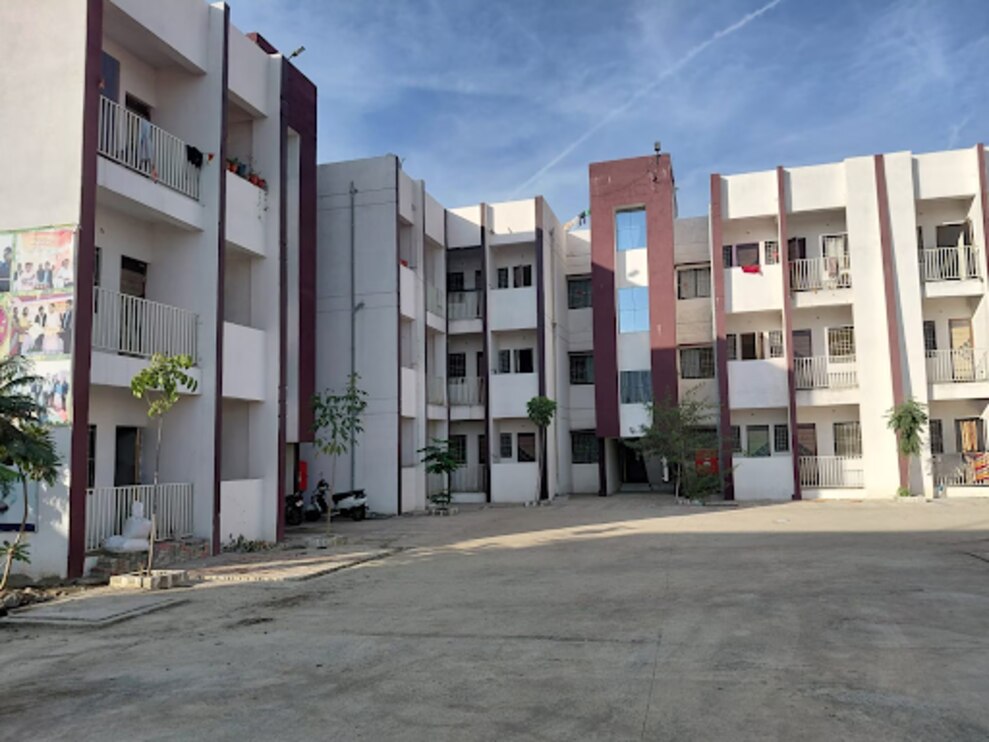
An affordable flat is not affordable if the EMI leaves no room for maintenance, registration charges, emergencies or daily living. You can set a safe purchase limit, compare 1 BHK, 2 BHK, row-house and resale options, inspect construction quality, and verify approvals before paying a token amount.
Key takeaways
- Include down payment, registration, maintenance and emergency savings in your budget.
- Compare carpet area and household needs, not only the advertised flat size.
- Inspect construction, services and approvals before paying a token amount.
- Check possession terms, closing costs and project risk before signing.
Set a Home Budget That Includes More Than the EMI
A safe affordable home budget starts with the cash you can pay upfront and the monthly cost you can sustain, not the maximum loan a lender approves.
Keep the home loan EMI plus maintenance, utilities, insurance and existing debt within about 40% of your monthly take-home pay, while preserving an emergency fund of at least six months’ expenses.
For every property, calculate these upfront costs separately:
- Down payment, based on the lender’s actual sanction rather than the regulatory ceiling
- Stamp duty and registration charges, checked against Maharashtra’s current ready-reckoner and registration guidance
- Parking, legal review, loan-processing charges and basic moving or furnishing costs
- Any 1% tax deducted at source under Section 194-IA when the consideration or stamp-duty value reaches ₹50 lakh for a purchase from a resident seller
For example, with ₹90,000 take-home pay and ₹10,000 in existing monthly debt, you might cap total housing outgo at ₹32,000.
A ₹25 lakh loan at 8.5% for 20 years produces an EMI of about ₹21,700 and total repayment of roughly ₹52.1 lakh; adding ₹5,000 for maintenance and utilities leaves limited room for rate increases or repairs. A ₹31.25 lakh home with a 20% down payment also needs ₹6.25 lakh before transaction costs.
Treat PMAY-U 2.0 subsidy as zero until your income, loan, property value and participating lender satisfy its conditions. A lower EMI is not affordable if it consumes your emergency savings.
Compare the Home Type Against Your Household’s Real Needs
A 1 BHK fits one or two occupants with limited belongings; choose a 2 BHK when a second bedroom must serve as a workroom, nursery or future family space. The right choice depends on use, not the lowest advertised price.
| Option | Best fit | Main trade-off |
|---|---|---|
| 1 BHK | Single buyer or couple with little storage | Less privacy and no separate workroom |
| 2 BHK | Couple planning children, guests or regular work from home | Higher purchase, furnishing and maintenance costs |
| Resale flat | Buyer needing an established location and quicker occupation | Repairs, older fittings and possible society dues |
| Plotted development | Buyer wanting to design and build gradually | Construction cost, approvals and delayed usability |
| Row house | Family wanting more privacy, direct access and outdoor space | Higher upkeep; land rights and common-road obligations need checking |
For the 1 BHK versus 2 BHK decision, mark where you will sleep, work, store appliances and accommodate visitors. If one room must perform two permanent jobs, the smaller home will feel expensive after moving costs and renovations.
The row house versus flat choice turns on your tolerance for maintenance. A row house needs a registered document identifying the plot or land interest, access, drainage, boundary-wall responsibility and easements; a private yard shown in a brochure is not proof of ownership.
A plotted development also requires a realistic construction budget, not just the plot price.
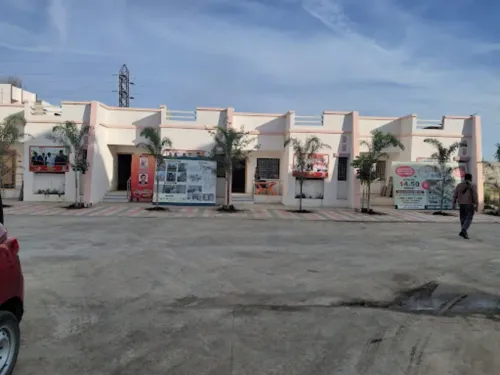
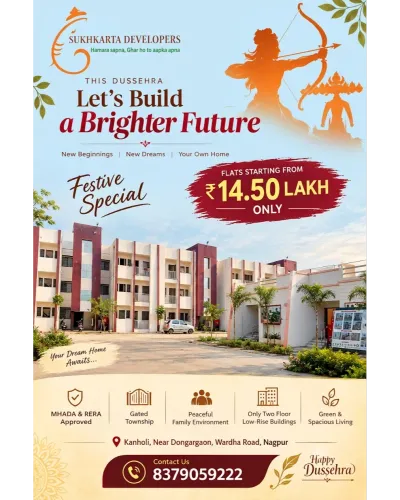
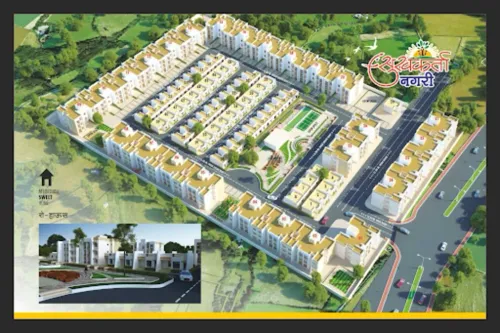
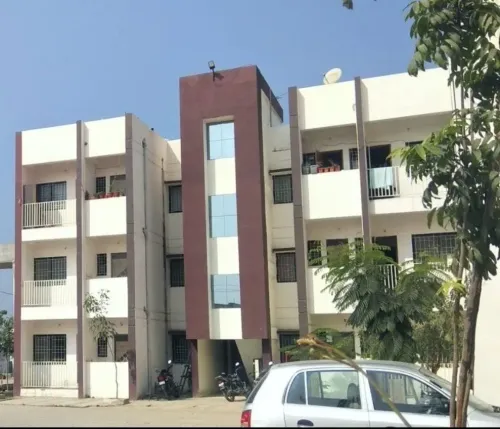
For buyers comparing Kanholi homes from SUKHKARTA DEVEOPERS, ask whether the layout supports your daily routine and whether the offered home type matches your ownership and maintenance expectations. Check the project and phase on the MahaRERA portal before treating the comparison as complete.
Related products
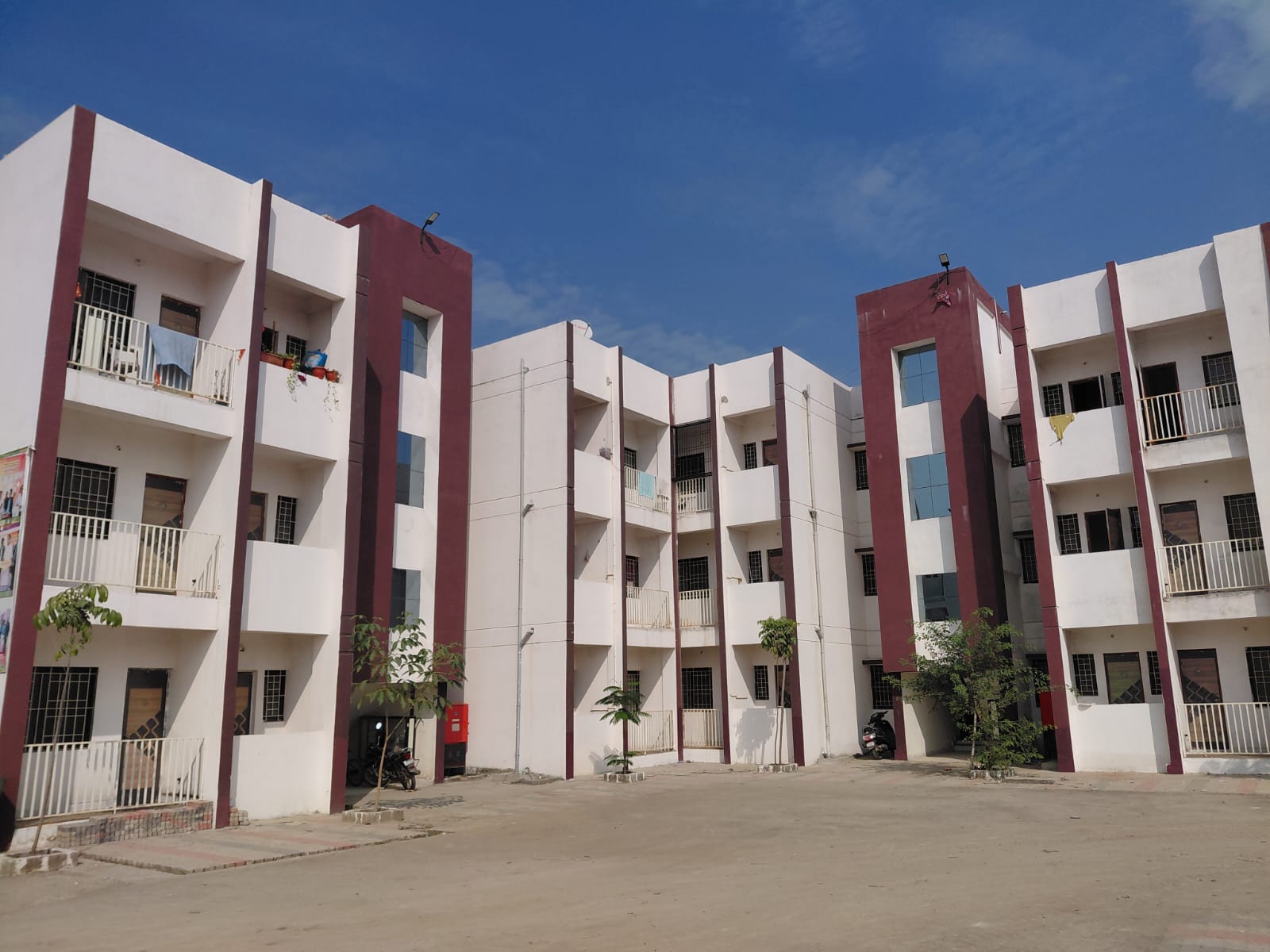 | Real Estate, Pradhanmantri Awas Yojana, MHADA ₹1450000 Compact Living, Grand Lifestyle: Discover the 1BHK Homes at Sukhkarta Nagari, Kanholi Why compromise on your dreams when you can own a home that... View product → |
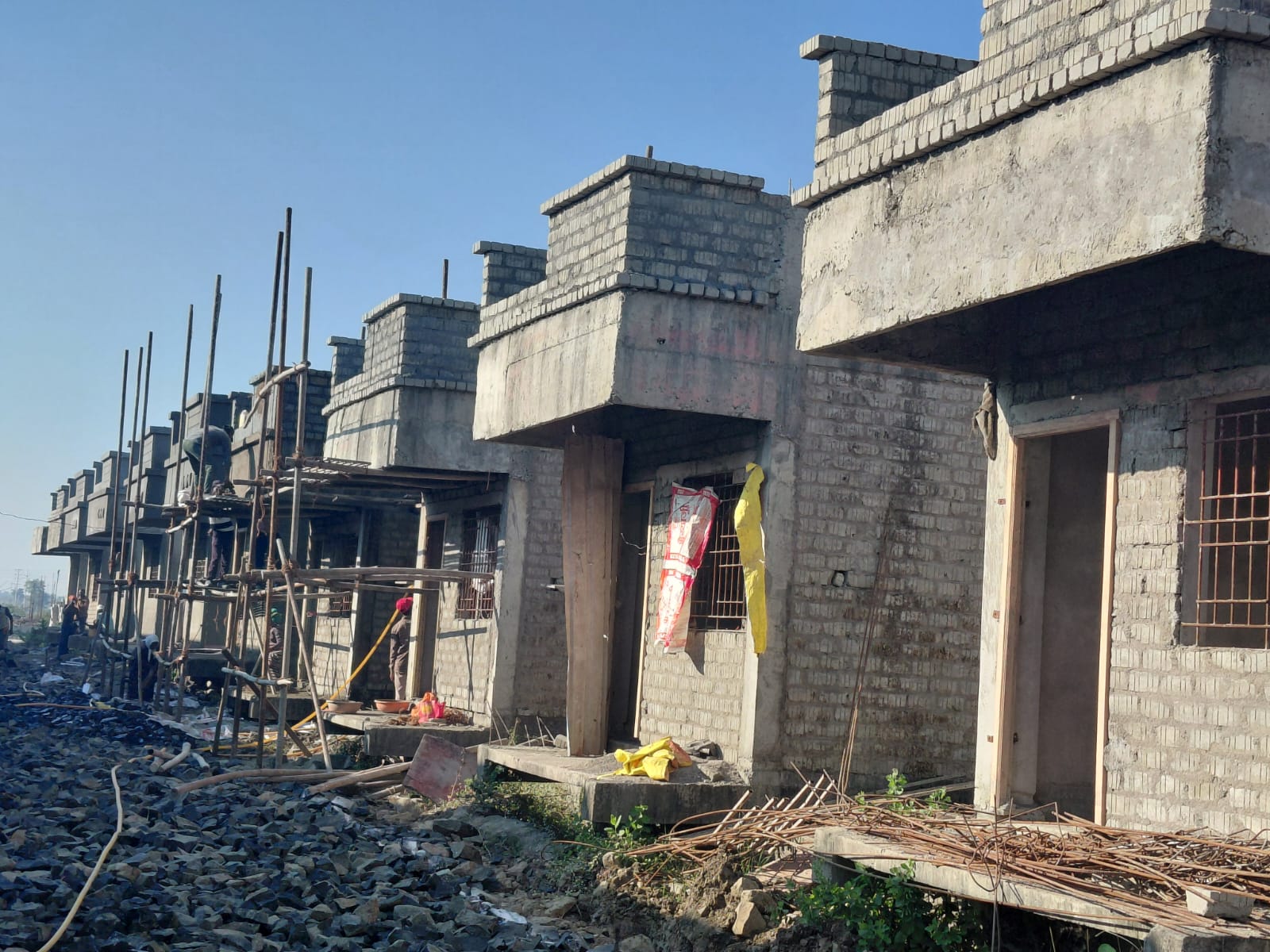 | Real Estate ₹2500000 Sukhkarta Nagari is a residential project located in Kanholi, Nagpur, developed by Sukhkarta Developers. View product → |
Inspect Carpet Area, Services and Construction Before You Decide
Compare the usable home, not the largest number in the brochure. RERA carpet area excludes external walls, service shafts, exclusive balconies and open terraces but includes internal partition walls; built-up area adds wall thickness and other spaces.
Calculate each flat’s price per square foot using RERA carpet area, then inspect whether the layout makes that area practical.
Use this flat inspection checklist during a daylight visit:
1. Measure key rooms against your furniture plan. Check door swings, passage width, storage corners and whether the bedroom fits a bed plus wardrobe without blocking movement.
2. Stand in each room with lights switched off. Good ventilation and daylight should reach living spaces, bedrooms and the kitchen; look for damp patches, peeling paint, hollow tiles, uneven floors and cracks around windows.
3. Run every tap, flush each toilet and test floor drainage. Switch on lights, fans, exhausts, sockets and the water heater point, then check the distribution board for clear circuit labels.
4. Inspect windows, balcony railings, bathroom slopes, kitchen counter joints and external walls. A weak seal or poor slope becomes seepage, rust or repair expense after the monsoon.
5. Walk through the project, not just the sample flat. Check lift operation, staircase access, fire exits, water supply, sewage treatment, waste collection, internal roads, lighting, visitor parking and children’s play areas.
Ask to see the specifications promised for your building and compare them with the actual fittings. Visit at peak traffic and evening hours to judge noise, access and security. Do not add a separate price for an open parking space until you check the sanctioned parking plan, agreement and society allocation rules.
Verify the Project and Scheme Claims Before Paying a Token
Before paying a token, obtain documents that prove the flat, the project and the promised benefit exist on paper. A booking form or brochure is not enough; the registered agreement for sale controls your rights.
| Check | What to verify | Why it matters |
|---|---|---|
| MahaRERA registration | Project number, promoter name, declared completion date, uploaded approvals, updates, orders and complaints | Exposes delay, approval and dispute risks |
| Sanctioned plan | Authority-stamped layout, floor plan, specifications and sanctioned parking plan | Prevents payment for an unauthorised room, amenity or parking space |
| Title documents | Development agreement or conveyance deed, latest title search, property card and encumbrance details | Reveals ownership defects, mortgages or competing claims |
| Registered agreement for sale | Carpet area, sanctioned plans, specifications, payment schedule, possession date, and interest or compensation terms | Replaces advertising promises with enforceable terms |
| PMAY-U 2.0 eligibility | Annual household income up to ₹9 lakh, housing loan up to ₹25 lakh, house value up to ₹35 lakh, lender participation and other scheme conditions | Stops you treating a conditional subsidy as an assured discount |
Do not pay more than 10% of the apartment’s cost before signing and registering the agreement for sale, even if the demand is called a booking amount. Treat a separate open-parking charge carefully: open parking is a common area, not an independent saleable unit. Confirm allocation under the agreement and society rules.
Check Maharashtra’s current Annual Statement of Rates and registration guidance for stamp duty and registration charges before fixing your cash requirement.
Turn Closing Costs, Possession Terms and Project Risk Into a Final Decision
A low quote is a good purchase only after you calculate the cash needed before registration and the cost of waiting for possession. Use the current Annual Statement of Rates and registration guidance on Maharashtra’s Inspector General of Registration portal, not an agent’s rough estimate.
Make these final checks:
- Add Maharashtra stamp duty, registration charges, parking, lender fees, utility deposits and moving costs to the agreement value. Keep this cash separate because home-loan limits do not guarantee finance for these charges.
- Calculate GST on under-construction flats. The rate is generally 5%; qualifying affordable residential apartments can attract 1% without input-tax credit. In Nagpur, check the ₹45 lakh price ceiling and 90-square-metre carpet-area ceiling. A completed building after its completion certificate or first occupation is generally outside this construction-service charge.
- Include Section 194-IA TDS when buying from a resident seller for ₹50 lakh or more, based on the consideration or stamp-duty value. The buyer deducts 1%, deposits it and gives the seller the required certificate; it is not an extra charge.
- Compare the agreement’s possession date with MahaRERA’s declared completion date. A possession letter is not an occupancy certificate. Ask for the occupancy certificate or completion certificate covering your specific building or phase before treating possession as fully regularised.
Then review MahaRERA updates, approvals, orders and complaints. If delay would force you to pay rent and EMI together, require a substantial cash buffer or choose the lower-risk project even when its headline price is higher.
Frequently asked questions
What should a home budget include besides the EMI?
Include the down payment, registration and stamp duty, brokerage, interiors, utility connections, maintenance deposits, moving costs and an emergency reserve.
How should you compare a 1 BHK, 2 BHK or row house?
Match the home type to your household size, work-from-home needs, storage, privacy, parking requirements and expected changes over the next five years.
What should you inspect before choosing a flat?
Check the carpet area, room dimensions, ventilation, natural light, water supply, power backup, lifts, drainage, construction quality and promised common services.
What should you verify before paying a token amount?
Ask for the project registration details, sanctioned plan, land and title documents, commencement permissions, developer identity, written specifications and the exact refund terms.
How do possession terms and project risk affect the final decision?
Compare the agreement’s possession date, delay compensation, cancellation rules, outstanding approvals, construction progress, lender acceptance and every closing cost.