The right first home is not simply the one with the lowest advertised price. You need to compare the complete cost of ownership, usable space, legal documents, daily convenience and the point at which a smaller home may stop fitting your life. By the end, you will have a practical method for deciding whether a 1 BHK is financially sensible and genuinely usable for you.
Key takeaways
- Compare down payment, EMI, furnishing and maintenance before choosing.
- Add maintenance, property tax, utilities and commuting to your monthly outflow.
- Measure furniture against the RERA carpet area, not the brochure size.
- Verify title, RERA details, construction quality and future space needs.
How a 1 BHK changes the cost of buying your first home
A 1 BHK gives first-time buyers a meaningful financial advantage over a 2 BHK when its RERA carpet area fits their life. The smaller purchase price reduces the down payment, home loan EMI and furnishing bill, leaving more money for an emergency fund.
Compare RERA carpet area, not super built-up area. Carpet area excludes external walls, service shafts, balconies, verandahs and open terraces, but includes internal partition walls.
An under-construction flat also needs GST in the acquisition budget: generally 1% for qualifying affordable apartments and 5% for other qualifying apartments; a completed unit sold after the completion certificate or first occupation generally avoids construction-service GST.
| Option | Financial effect | Main trade-off |
|---|---|---|
| 1 BHK | Smaller loan, lower upfront exposure and less furnishing | Limited room for work, guests or a growing family |
| 2 BHK | More usable separation and stronger future flexibility | Higher purchase price, EMI and furnishing cost |
| Renting | Lower initial commitment and easy relocation | No ownership and rent increases over time |
| Postponing | More time to build savings or improve eligibility | Prices, rent or interest rates can rise while you wait |
Before calling a 1 BHK cheaper, include these costs:
- Home loan EMI, including the effect of a variable interest rate
- Maintenance, property tax and home insurance
- Utilities, parking and commuting
- Registration, furnishing and appliance purchases
A distant 1 BHK can erase its EMI advantage through daily travel. Association charges also do not necessarily fall in proportion to size because lifts, security, water systems and sinking-fund contributions are shared costs.
Calculate the full monthly outflow before choosing a flat
Test 1 BHK affordability against your take-home pay, not the advertised EMI. Add every monthly bill and every one-time purchase cost before deciding how large a down payment you can safely make.
| Cost | Include | Check |
|---|---|---|
| Monthly loan | EMI at the quoted interest rate | Recalculate if the rate rises by 2 percentage points |
| Monthly ownership | Maintenance charges, property tax, home insurance, utilities, parking and commuting | Use the society’s written charge schedule |
| One-time purchase | Down payment, stamp duty, registration, GST if applicable, parking, brokerage, furnishing and appliances | Request a written cost sheet from the seller |
After adding the monthly costs, retain an emergency fund instead of using every available rupee for the down payment. A lower EMI loses its advantage if the flat requires an expensive commute or leaves no money for repairs, medical needs and job changes.
Ask whether maintenance includes security, lift operation, common-area electricity, water systems and sinking-fund contributions. Property tax and insurance are easy to omit because they arrive separately from the loan statement.
Check PMAY-U 2.0 eligibility on the official government portal before counting housing assistance in your budget. Do not treat an advertisement’s subsidy claim as approved funding. The purchase passes the test only when the full monthly outflow remains manageable after these costs and your emergency reserve stays intact.
Judge the layout by your belongings, not the brochure area
A 1 BHK has enough space only when your furniture and routines fit without blocking movement. Start with the RERA carpet area: it includes internal partition walls but excludes external walls, service shafts, balconies, verandahs and open terraces.
Treat built-up area and super built-up area as comparison figures, not living space. Built-up area generally combines carpet area with wall thickness and attached areas; super built-up area also includes your share of common areas. Two flats with the same advertised super built-up area can feel very different.
Take the dimensioned 1 BHK floor plan and mark:
- A double bed, wardrobe and bedside table in the bedroom, leaving space to open doors and drawers.
- Your sofa, television unit and work desk in the living room, with a clear route to the bathroom and bedroom.
- The refrigerator, washing machine, countertop appliances and storage cabinets in their actual positions.
- Kitchen work space beside the sink and hob; a narrow passage can make daily cooking frustrating.
- Cupboards for clothes, luggage, cleaning supplies and pantry items, rather than assuming loose storage will fit later.
- Window and balcony positions, checking daylight, cross-ventilation and whether the balcony can hold laundry or seating.
Visit the flat with a tape measure and your furniture dimensions. Stand in the kitchen, open every door, walk from the entrance to the bathroom, and test the balcony. A slightly smaller flat with better light, storage and circulation can be more usable than a larger one with wasted passage space.
Check the documents, construction and running costs
A low booking price means little if the documents, promised specifications and monthly charges do not match. Before paying, compare the sales material with the project’s official records and your agreement for sale.
- Search the project on MahaRERA. Check the registered carpet area, sanctioned building plan, declared possession date, promoter disclosures and litigation details. If the project claims an exemption because it has no more than 500 square metres of land or eight apartments, ask for the written basis; exemption does not remove all risk.
- Read the agreement for sale before signing. It must identify the flat, carpet area, possession terms, payment schedule, cancellation conditions and included facilities.
- For a ready flat, demand the occupancy certificate or completion document applicable to the project. Confirm that the lift, water connection, access road and promised common facilities are legally usable.
| Check | Verify | Why it matters |
|---|---|---|
| Construction | Structural specifications, wall finish, plumbing, electrical points, waterproofing and fire-safety provisions | Missing or downgraded work creates repair costs |
| Parking | Whether it is open, covered or mechanically stacked, and allotted to your apartment | Brochure wording cannot replace contractual allotment |
| Recurring charges | Maintenance, security, lifts, common electricity, water systems, property tax and sinking fund | A 1 BHK does not always cost half as much as a 2 BHK |
| Purchase extras | GST for an under-construction unit, stamp duty, registration and insurance | These charges can sit outside your loan and cash budget |
Decide whether the smaller home will still work for your future
A 1 BHK is practical when one or two occupants can live comfortably for at least five years and the location keeps commuting manageable. Choose a 2 BHK when:
- You expect a child
- You need a regular work-from-home room
- Parents visit frequently or live-in help may be needed
The second room can prevent an early upgrade, moving expense and another round of registration and brokerage.
Location can decide whether a 1 BHK investment remains useful. In Nagpur’s spread-out market, compare peak-hour travel time, not just the booking price. For a Nagpur residential property, inspect access to:
- Employment clusters and public transport
- Universities and hospitals
- Established retail and daily services
These anchors support rental demand and resale value. A cheaper flat on the periphery can sit vacant or attract a narrower buyer pool, while a costlier home near routine destinations may be easier to rent and sell.
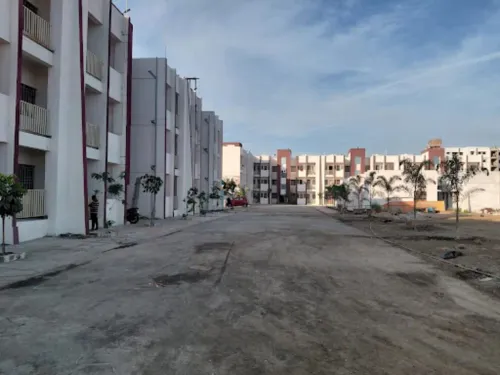
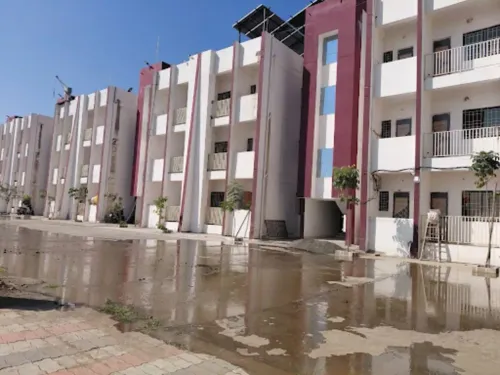
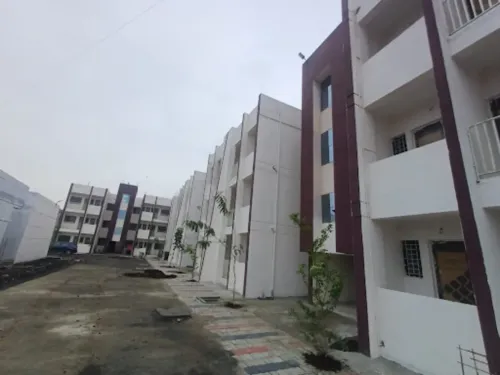
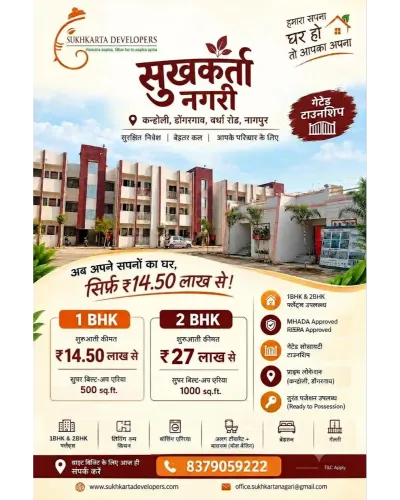
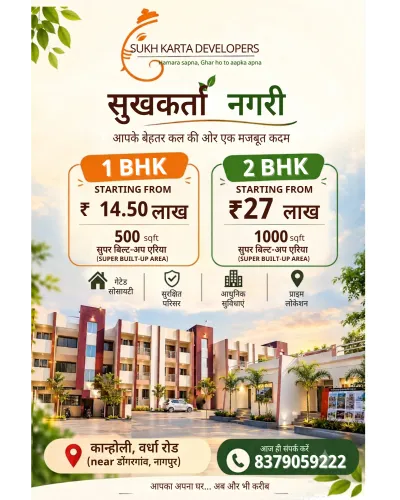
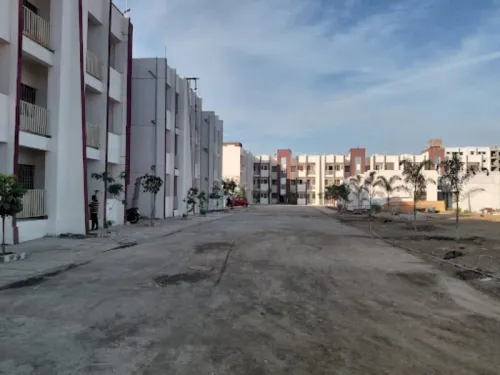
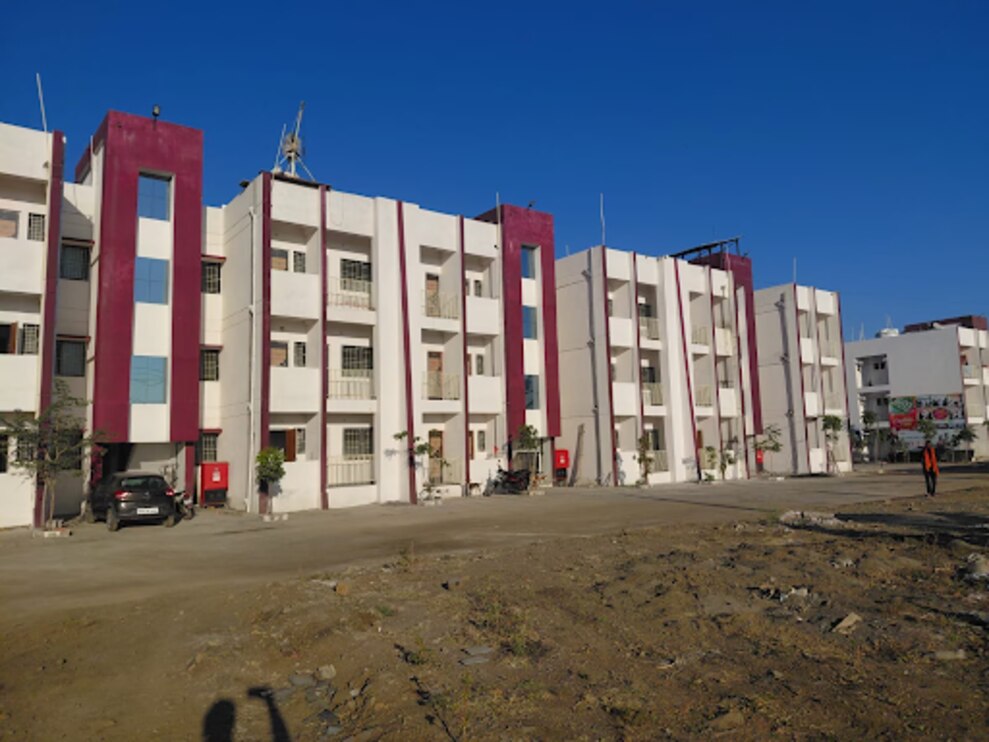
For a project you are considering from SUKHKARTA DEVEOPERS, make this map using your actual workplace, family needs and travel route.
Choose the 1 BHK if its layout fits your furniture, storage and work habits without turning the living room into a bedroom-office. Choose the 2 BHK if you need separation or expect your household to grow. The right 1 BHK is not the smallest one; it is the one you will not outgrow quickly.
Related product
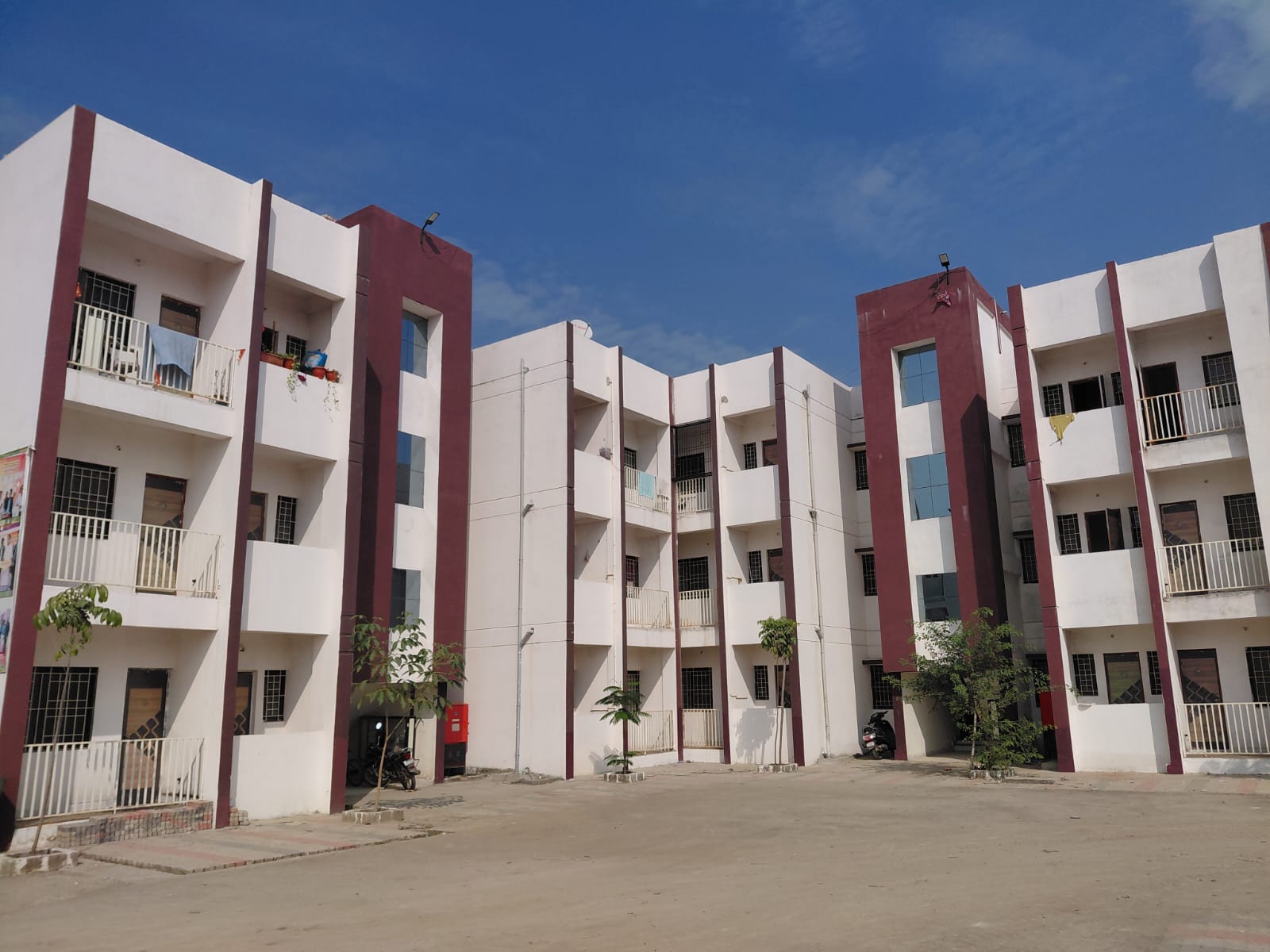 | Real Estate, Pradhanmantri Awas Yojana, MHADA ₹1450000 Compact Living, Grand Lifestyle: Discover the 1BHK Homes at Sukhkarta Nagari, Kanholi Why compromise on your dreams when you can own a home that... View product → |
Frequently asked questions
How can a 1 BHK reduce the cost of buying a first home?
A smaller purchase price usually lowers the down payment, home loan EMI and furnishing cost, leaving more money for an emergency fund.
What costs belong in a 1 BHK monthly budget?
Include the home loan EMI, maintenance charges, property tax, utilities, insurance, parking or society fees and commuting costs.
How should you judge whether a 1 BHK layout will fit?
Use the RERA carpet area and compare each room’s dimensions with your actual furniture, storage needs and daily routines.
What should you check before buying a 1 BHK flat?
Check the title and RERA details, sanctioned plans, construction quality, possession terms, maintenance charges and likely future space requirements.