A 2 BHK can feel spacious on a floor plan and cramped after you place two beds, wardrobes, a refrigerator, and a dining table. You will be able to test the layout, calculate the real purchase cost, verify documents, and judge whether the flat suits your household before committing money.
Key takeaways
- Map your household’s daily movements against the actual 2 BHK floor plan.
- Compare carpet area and usable storage, not the largest advertised area.
- Add registration, taxes, maintenance, parking and other costs to your budget.
- Verify MahaRERA records, sale documents and promised specifications before booking.
Test the 2 BHK Against Your Household’s Daily Routine
A 2 BHK fits your household when everyone can complete daily tasks without blocking someone else. Draw your actual routine from waking to bedtime, then test each movement on the floor plan: sleeping, dressing, cooking, eating, studying, working, washing clothes and storing supplies.
- Place your real beds, not generic rectangles. Check bedroom size for bed width, wardrobe depth, door swing and at least one clear walking route. If both bedrooms require crossing the living room for privacy, the layout may become tiring for adult occupants or overnight guests.
- Mark storage space for clothes, suitcases, shoes, cleaning equipment and seasonal items. A room that fits a bed but leaves no wardrobe wall will feel smaller within weeks.
- Measure the kitchen for a refrigerator, worktop and sink triangle. Confirm that an open refrigerator door does not block the cooking route or dining area.
- Check the utility area for your washing machine, drain, electrical point and drying rack. A narrow balcony is not a substitute if laundry will obstruct circulation.
- Place your dining table and chairs, then open every chair at once. Test balcony depth for actual use, such as seating or drying clothes, rather than judging it from the view.
- Locate shafts, columns and window positions. They can remove the wall length you expected for storage or furniture.
For 2 BHK household suitability, also test weekday noise and privacy: separate children’s study, remote work or elder-care needs from the busiest passage. If the routine fails on paper, a larger 1 BHK, 3 BHK, row house or rented home may serve you better.
Compare Usable Space, Not the Brochure’s Largest Number
Compare two flats using RERA carpet area, because it reflects the floor space inside the home after excluding external walls, service shafts, balconies and verandahs. Built-up area adds walls and attached spaces; super built-up area also spreads a share of lobbies, staircases and other common areas across each flat.
The biggest brochure number is therefore the least useful comparison.
| Area measure | What it includes | How to use it |
|---|---|---|
| RERA carpet area | Enclosed internal floor space, excluding external walls, shafts, balconies and verandahs | Compare the actual usable size of both 2 BHK flats |
| Built-up area | Carpet area plus wall thickness and attached areas | Check construction proportions, not living capacity |
| Super built-up area | Built-up area plus allocated common areas | Compare pricing only after checking the carpet-area ratio |
Ask for the sanctioned plan and agreement for sale, then confirm that the stated carpet area, room positions, balcony dimensions and parking arrangement match what was shown during booking. A sample flat cannot replace these documents.
Take a furniture measurement checklist to the site:
- Measure your bed, wardrobe depth, sofa, dining table, refrigerator and washing machine.
- Mark bed clearance on two sides, wardrobe door movement and sofa-to-wall walking space.
- Check the refrigerator-to-counter path, washing-machine point, kitchen worktop and shaft location.
- Open every door and window fully; door swings can consume the only practical passage.
- Measure balcony depth after railings and drainage projections, not from the outer wall.
Reject a flat where your largest furniture fits only on paper. A slightly smaller carpet area with clear circulation can work better than a larger, awkwardly shaped plan.
Calculate the All-In Cost Before Setting Your Budget
A flat is affordable only when you can fund the purchase, move-in work and recurring charges without exhausting your emergency savings. Treat the quoted apartment price as one line in the calculation, not the final number.
1. Request a written cost sheet showing the basic price, floor-rise or preferential-location charges, parking charges, stamp duty, registration charges, GST where applicable, brokerage fees, legal fees, loan-processing charges and any documentation fees. Confirm whether GST applies by asking for the tax invoice and the project’s possession status.
2. Add the amount needed before moving in: maintenance advance, society or facility deposits, electricity and water connection deposits, modular kitchen, wardrobes, lights, fans, curtains, appliances and backup-power equipment. A low base rate can become unaffordable once these essentials are included.
3. Calculate the monthly load after possession. Include the home-loan EMI, maintenance, property tax, insurance, electricity, water-treatment charges and parking or clubhouse fees. Keep a separate allowance for repairs and appliance replacement.
4. Ask how water will operate in summer. Identify the municipal, borewell or tanker source; storage capacity; tanker access; treatment charges; and restrictions included in the maintenance budget.
5. Price each advertised amenity over time. Confirm its place in the sanctioned plan, inclusion in the agreement, promised completion phase and recurring charge. A delayed clubhouse or pool still adds to your projected cost if the maintenance budget starts early.
Set your maximum budget from this complete figure, then retain an emergency reserve instead of borrowing up to the lender’s limit.
Check MahaRERA Records and Sale Documents Before Booking
Do not pay more than a token booking amount until you have checked the project’s MahaRERA registration number and reviewed the draft agreement for sale. Under RERA, a promoter cannot accept more than 10% of the apartment’s cost without first entering into and registering this agreement.
Ask for these documents and compare them with the sales promise:
- MahaRERA registration record, including promoter details, declared completion date, litigation or encumbrance disclosures, quarterly updates and uploaded approvals.
- Sanctioned building plan showing your tower, flat position, carpet area, open spaces, amenities, access roads and any future towers.
- Commencement certificate confirming that construction has approval to begin for the relevant building or phase.
- Title and encumbrance records, including the title report, property card or 7/12 extract where applicable, and a search report showing mortgages, claims or other charges.
- Draft agreement for sale stating carpet area, possession date, specifications, parking arrangement, amenities, payment schedule and consequences of delay.
| Document | Compare | What a mismatch can indicate |
|---|---|---|
| Sanctioned building plan | Brochure, model flat and current site layout | Unapproved changes or reduced open space |
| MahaRERA record | Promised completion date and amenities | Delayed timelines or undisclosed alterations |
| Agreement for sale | Every sales-office commitment | A promise that is difficult to enforce |
| Title and encumbrance records | Seller’s ownership and lender disclosures | A claim or charge affecting the property |
Check whether the plan shown at booking matches the latest sanctioned version. A major change to sanctioned plans or common areas after sale requires consent from at least two-thirds of allottees, excluding the promoter. Keep stamped copies and written clarifications before signing.
Use the Site Visit to Verify Specifications and Future Livability
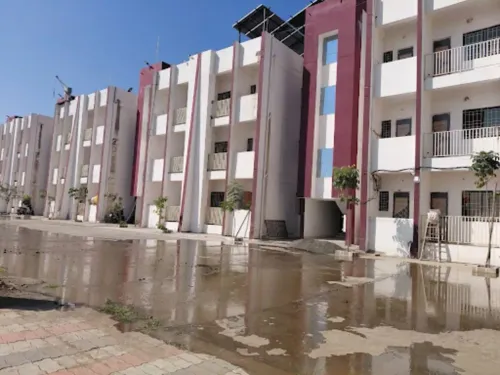
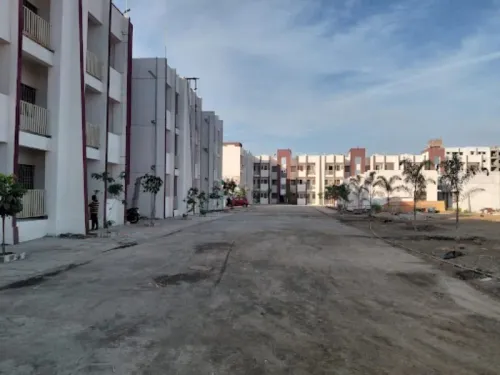
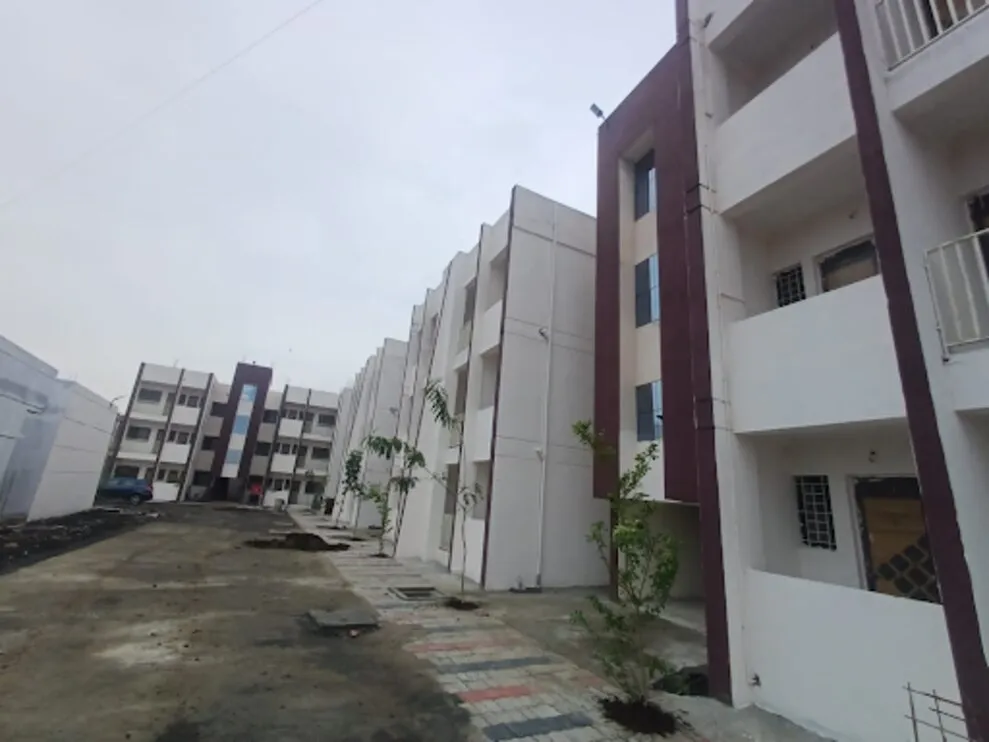
Inspect the approach road, building entrance, common areas and the actual flat before choosing. Visit during or immediately after heavy rain in Nagpur: standing water near the basement ramp, a low site, blocked storm-water outfalls or an unmaintained access road can become daily problems.
Use this site checklist:
- Compare the flat’s carpet-area measurement, room positions, balcony, utility space, parking bay and promised amenities with the sanctioned plan and agreement for sale.
- Check the schedule of specifications against visible materials: flooring, doors, windows, electrical points, lifts, generator backup, fire equipment, plumbing fixtures and wall finishes.
- Ask who maintains the approach road, confirm water supply and drainage arrangements, and inspect the finished floor level, basement pumping and sewage connection.
- Ask for the occupancy certificate: identify the issuing authority, the building or wing it covers, and whether fire safety, electricity, access, water and drainage conditions were met.
| Item | Inspect or ask on site | Compare against |
|---|---|---|
| Open space and future towers | Confirm roads, gardens, parking and construction zones | Current sanctioned plan and MahaRERA upload |
| Flat delivery | Check visible workmanship and service points | Agreement for sale and schedule of specifications |
| Access and flooding | Visit after rain; note low-lying plots and ramp water | Site plan and promised infrastructure |
| Legal readiness | Ask for the occupancy certificate, not only a possession letter | Issuing authority and covered buildings |
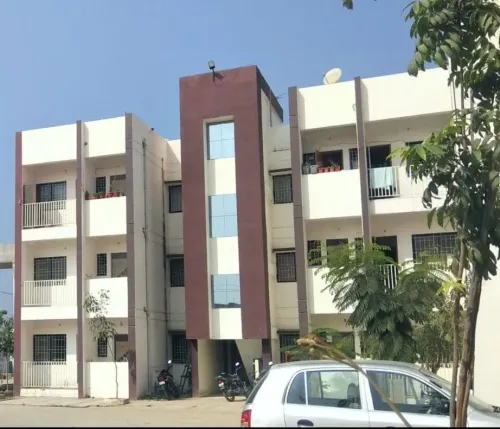
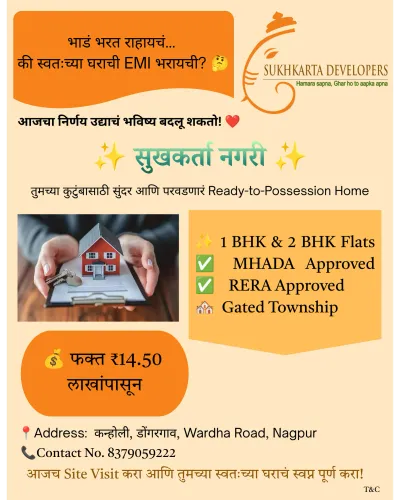
SUKHKARTA DEVEOPERS buyers should apply this same document-to-site check at any project: a sample flat demonstrates a finish, but only the signed agreement and sanctioned plan establish what you are buying. Do not pay more than 10% before the agreement for sale is entered into and registered.
Frequently asked questions
How can you test whether a 2 BHK suits your household?
Map your daily routine from waking to bedtime, then check whether sleeping, cooking, working, studying, washing and storage can happen without blocking movement.
Which area figure should you compare when choosing a 2 BHK flat?
Compare carpet area and the usable space in each room, including circulation, storage, kitchen work space and balcony access rather than relying on the largest brochure number.
What costs should you include before setting a 2 BHK budget?
Calculate the agreement value plus registration, stamp duty, GST when applicable, parking, maintenance deposits, utility connections, interiors and loan-related charges.
What should you verify before booking a 2 BHK in Maharashtra?
Check the project’s MahaRERA records, approved plans, possession details, development permissions, title and encumbrance documents, agreement terms and the specifications promised by the developer.