


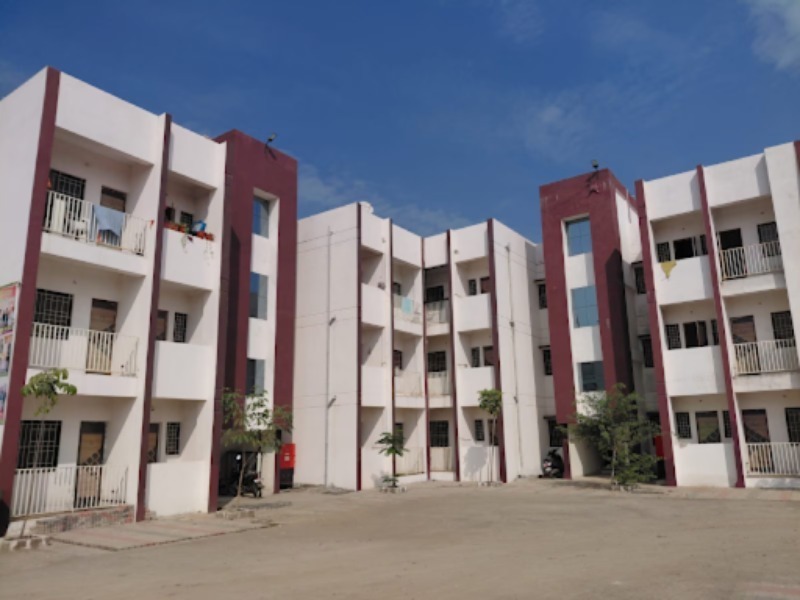
Real estate can form part of a long-term investment strategy, but purchasing property for investment requires different thinking from buying a home solely for personal use. When assessing Flats For Investment, buyers need to consider rental demand, location, purchase cost, holding expenses, resale potential, and the quality of the underlying project.
Nagpur has expanded across several residential corridors, and areas such as Wardha Road are often examined by buyers interested in both housing and investment opportunities.
Location Influences Investment Performance
A well-located flat may attract more attention from future tenants and buyers, but location should be assessed using practical criteria rather than broad claims.
Consider connectivity with:
- Employment areas
- Educational institutions
- Healthcare facilities
- Transport infrastructure
- Shopping and daily conveniences
- Major roads
- Established residential neighbourhoods
Investors should distinguish existing connectivity from proposed infrastructure. Future development can influence a location, but investment decisions should not depend entirely on uncertain projections.
Rental Yield Is Only Part of the Return
Some investors focus exclusively on expected monthly rent.
Rental yield is useful, but property ownership also involves expenses. Maintenance, periods without a tenant, repairs, taxes, transaction costs, loan interest, and other expenses can affect actual returns.
A simple assessment can start with annual expected rent compared with the total property acquisition cost. From there, expected ownership expenses can be considered to obtain a more realistic picture.
Rental rates should be validated using current local market evidence rather than relying on assumptions.
Entry Price Matters
Buying at a sensible price can influence long-term investment performance.
Compare similar properties in the surrounding market according to configuration, carpet area, construction quality, age, possession status, and location.
An unusually low price deserves investigation just as much as an unusually high one.
Investors should understand exactly what they are purchasing and why the property is priced at that level.
Choose a Configuration With Local Demand
A configuration that performs well in one neighbourhood may have different demand elsewhere.
Compact flats can appeal to working individuals and small households, while larger homes may attract families. The correct choice depends on the tenant and buyer profile in the specific micro-market.
Speaking with multiple local market participants and reviewing comparable rental listings can provide useful context.
Documentation Protects the Investment Decision
Property investors should approach legal verification with the same care as end users.
Review RERA details where applicable, approved plans, title-related records, agreement terms, payment schedules, and possession documentation relevant to the transaction.
Independent professional advice can be valuable, especially for NRIs or buyers managing the transaction from another city or country.
Evaluate the Developer and Property Quality
A flat remains a physical asset that needs to appeal to future occupants.
Look at layout efficiency, ventilation, construction specifications, common-area maintenance, parking arrangements, and neighbourhood accessibility.
Investors examining residential offerings from Sukhkarta Developers can review project-specific information and available configurations in relation to their intended investment horizon.
Avoid Guaranteed Return Assumptions
Property values and rental demand can change. No responsible investment evaluation should assume guaranteed appreciation or assured rental income.
The strongest approach is to purchase based on verifiable fundamentals.
When evaluating Flats For Investment, consider the acquisition price, actual local demand, ongoing expenses, legal documentation, property quality, and realistic exit possibilities.
For investors looking at Nagpur and the broader Maharashtra property market, disciplined analysis is more useful than chasing predictions. A property with sound fundamentals may deserve consideration, but the final investment decision should always reflect the buyer's finances, risk tolerance, and long-term objectives.